


Prairie View A&M head coach Tremaine Jackson didn’t just speak frankly at the American Football Coaches Association convention — he spoke a truth few college coaches want to say out loud.
“I don’t think we can be successful and keep our jobs with a bunch of 18-year-olds,” Jackson said, explaining his focus on the transfer portal over high school recruiting.
Some will call that cynical. It’s not. It’s reality.
The game has changed, and Jackson is one of the few willing to adapt without apology. The transfer portal, for all its chaos, is now the most efficient equalizer to compete quickly.
High school recruiting once built foundations; today, it’s no longer the lifeblood that feeds programs.
Coaches can no longer afford to invest years developing a player who might bolt after one breakout season. The portal offers a different kind of stability — older, stronger, game-tested athletes who can contribute immediately.
Transfer portal shifts power dynamic
For HBCUs like Prairie View, the math is especially brutal. Competing with NIL budgets and facilities of major schools for blue-chip high school recruits has never been fair.
The portal shifts that power dynamic — it gives smaller programs access to a larger pool of players who have something to prove.
Jackson’s approach doesn’t reject high school players completely; it recognizes that time and context matter more now than potential alone.
Prairie View is likely to sign 35 transfer players in January and might have 60 new players in total by the fall, according to a Houston Chronicle report.
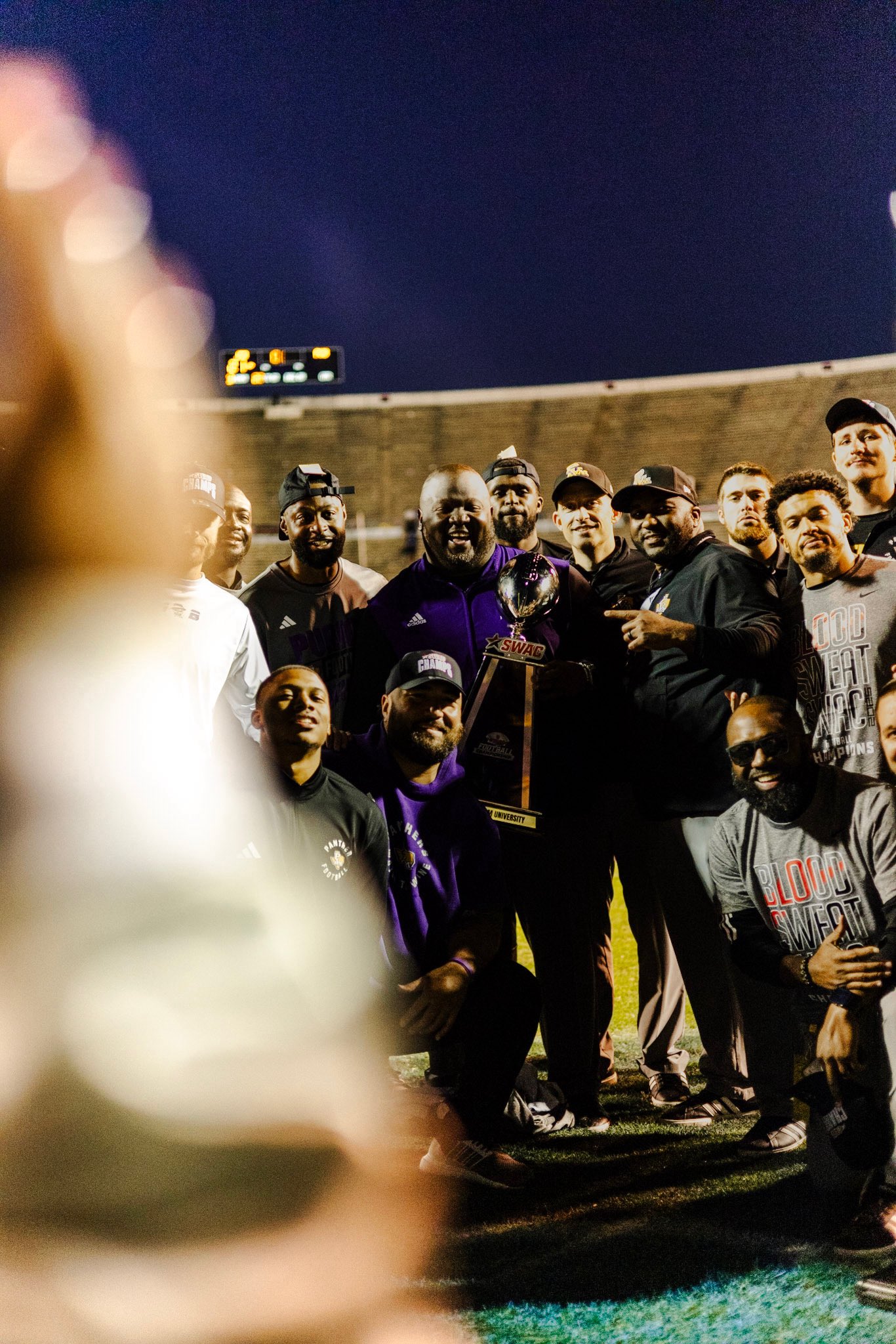
In Jackson’s first season, the Panthers added more than 40 transfers to the roster, which helped the program win 10 games, the SWAC championship, and a berth in the coveted Celebration Bowl.
The Panthers’ opponent in the de facto HBCU national championship game — South Carolina State — featured a roster that included 32 players from the transfer portal, which helped the Bulldogs take the title.
Going further, FCS National Championship Game participants Montana State and Illinois State consisted of 40 contributors who were either juniors or seniors, according to an analysis by FCS Football Central.
Most schools in Black College Football are relying on older, more experienced players to fill roster gaps or be immediate pieces to a contending team.
Coaches are under more pressure than ever to win now
Jackson’s stance also underscores a tougher conversation about what college football has become: a results-driven business. Fans expect wins, presidents expect revenue, and athletic directors expect justification for every contract.
In recent years, Grambling State fired Hue Jackson after two seasons. Eric Dooley, who had a long history of success as an assistant and head coach, was gone after nearly two years at Southern. His replacement — Terrence Graves — lasted just one season after winning the SWAC West. James Colzie, hired to replace Willie Simmons when he bolted for Duke after leading Florida A&M to a Black National Championship, was let go amid a mediocre 24-game run.
A roster full of mature transfers might lack the romanticism of nurturing a freshman class, but it keeps a program competitive — and a coach employed.
Jackson’s honesty should be applauded, not criticized. He understands the old way won’t save a job in this new era.
The portal might be messy, but for coaches at Prairie View A&M and beyond, it’s survival.
And survival, in today’s college football, is the name of the game.