

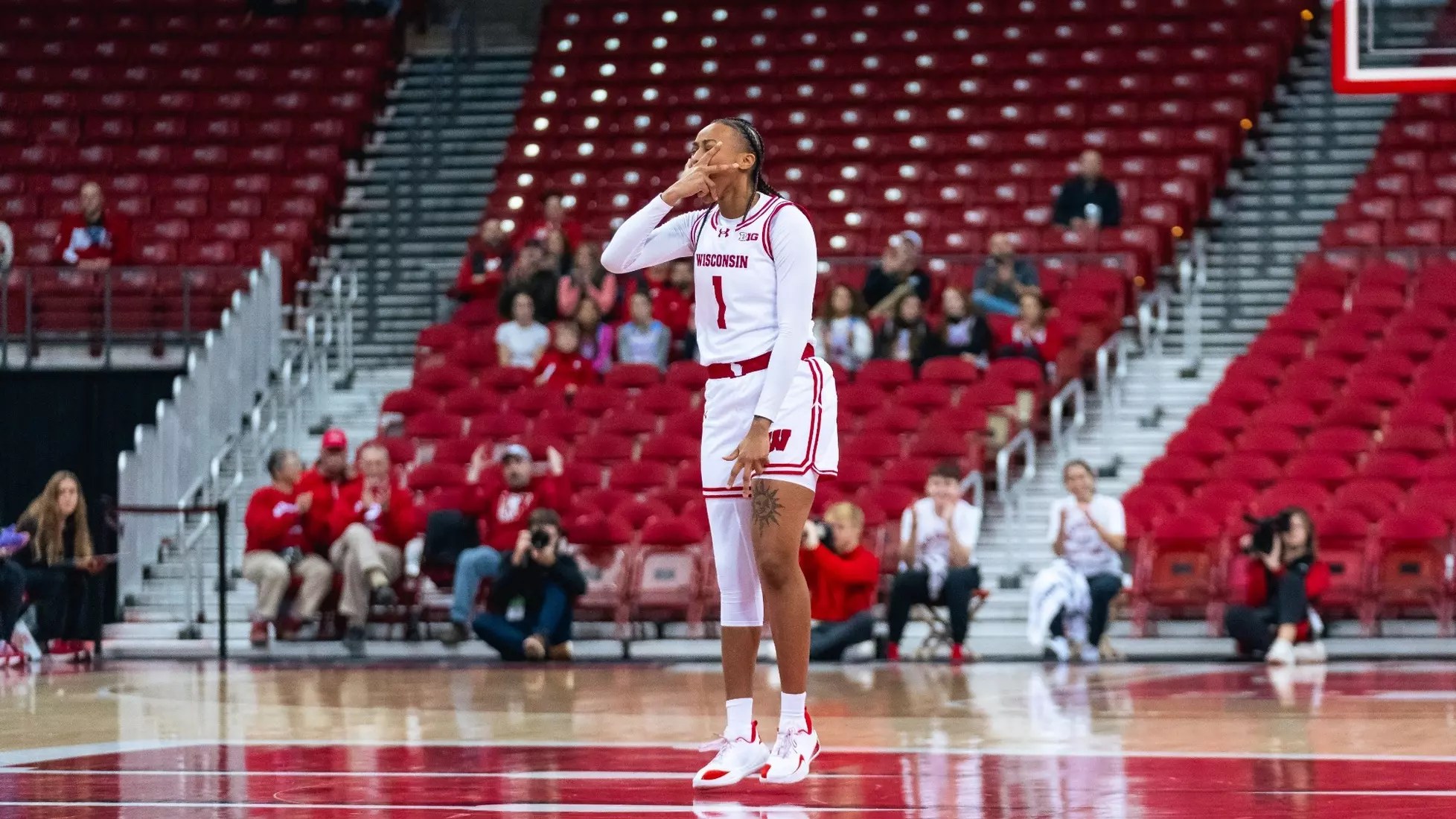

Former Howard guard Destiny Howell delivered a performance for the history books — and a reminder of the elite talent that continues to come out of the HBCU ranks.
In a double-overtime classic against Oregon on January 18, Howell scorched the Ducks for a career-high 39 points, drilling a Wisconsin program-record 10 three-pointers to lift the Badgers to a statement win. It wasn’t just a hot night — it was a star announcing herself on one of college basketball’s biggest stages.
A Record-Breaking Night
When the game tightened and legs got heavy, Howell’s confidence only grew. She finished 10-of-16 from beyond the arc, repeatedly answering Oregon runs with daggers from deep. Each make pushed Wisconsin closer to victory — and Howell further into program lore.
Asked postgame what it felt like to be on that kind of heater, Howell gave a response every hooper understands:
“Kinda like I’m not even there fully… I’m just in a whole different space. Not really thinking — just moving intentionally. I knew we weren’t leaving here without a win.”
That mindset showed. In double overtime, Howell controlled the moment, playing loose, fearless, and locked in — the same traits that once made her one of the most dangerous guards in the HBCU landscape.
Howell’s Rise at Howard: An HBCU Star Is Born
Before lighting up Big Ten defenses, Destiny Howell built her name at Howard University, where she developed into one of the MEAC’s most dominant scorers.
Her freshman season saw her earn rotation minutes, finishing seventh on the team in scoring. But her sophomore year marked the real breakout. Given a starting role, Howell took full advantage — leading the Bison in scoring and three-pointers made, while also ranking second in steals.
That season culminated in a MEAC Championship, where Howell was named Tournament MVP and earned Second Team All-Conference honors. She also helped Howard secure its first-ever NCAA Tournament win, knocking off Incarnate Word.
MEAC Player of the Year and WNBA Attention
Howell’s junior year cemented her legacy. Entering the season as Preseason MEAC Player of the Year, she backed it up by winning the award outright — leading the conference with 16.8 points per game.
That season put WNBA scouts firmly on notice. Howell recorded multiple 30-point performances, including a 30-point outing in the MEAC Championship game against Norfolk State. Her career-high 35 points came in a matchup against VCU, showcasing her ability to score at all three levels.
For many evaluators, it was clear: elite talent was thriving at an HBCU, once again.
Injury, Resilience, and a New Beginning
Howell’s momentum was halted when a torn ACL ended her senior season prematurely. After receiving her year back, she returned to Howard still finding her rhythm, averaging 14.5 points per game while working her way back to full strength.
The move has paid off.
Flourishing in the Big Ten
Through 15 games this season, Howell is averaging 15 points per game, shooting nearly 40 percent from three while emerging as one of Wisconsin’s most impactful newcomers.
And against Oregon, she showed exactly why her game translates anywhere — conference, system, or spotlight.
A Bigger Question for the Sport
Howell’s rise reignites an important conversation: Are enough WNBA scouts truly paying attention to HBCU talent?
Her journey — from Howard to the Big Ten, from MEAC dominance to program records — is proof that elite players don’t come from just one pipeline. They’re everywhere, waiting for opportunity.
And if Destiny Howell’s night against Oregon was any indication, overlooking the HBCU ranks might be a costly mistake.